🎄 Intro
It is December, the most wonderful time of the year for programmers. But as we log in for Advent of Code (AoC) 2025, you might notice the atmosphere is a little different. We passed a decade of Eric Wastl’s incredible work, and with this milestone comes a significant shift in tradition.
Before diving into solutions, I want to take a moment to reflect on the state of AoC this year, the changes we are seeing, and why—despite everything—we keep coming back to the terminal.
The 2025 Format Changes
If you are looking for the Global Leaderboard or preparing for a 25-day marathon, you have likely noticed two major adjustments:
- No Global Leaderboard: The competitive rush has been removed this year.
- A 12-Day Calendar: Instead of the usual 25 days, the event runs for 12 days.
While these changes might feel surprising to veterans, they come with a message of empathy. Maintaining a project of this magnitude for ten years is a grueling, massive commitment. Eric has consistently operated on a whole other level to bring us these elegant, funny, and creative challenges. Acknowledging the “human cost” of this event means supporting the creator’s need to protect his time and mental health.
Why We Still Solve
In 2025, amid the noise of AI and code assistants, a valid question arises: “Why bother solving puzzles when an AI can do it in seconds?”
The answer is simple: People still go to musicals and live concerts even though Spotify exists.
We don’t do Advent of Code because it is the “efficient” way to get an answer. We do it because we want to solve the puzzle. We do it for the thrill, the frustration, and the learning. AoC is a way to reconnect with the simple love of programming. It caters to every level, from the beginner just starting out to the seasoned dev looking for a spark.
A Generational Tradition
Whether it is 25 days or 12 days, Advent of Code has become a tradition as strong as Star Wars for many of us. It is something to pass down; there are children today wearing AoC pajamas, growing up with these puzzles as a holiday staple.
So, to Eric: Thank you for the last 10 years. We are here for the puzzles, the community, and the tradition—in whatever format works for you.
Now, let’s open up the editor and solve Day 1. SPOILER ALERT!
⏰ Day 1 : The Safe
Oh no, apparently Elves have discovered Project Management! (I suspect this to be an hint about the reduced number of stars this year, did Eric switch role?)
You have a safe with 100-positions dial (0 to 99), and istructions to rotate Left and Right a number of time : L68 L30 R48 L5 R60 L55 L1 L99 R14 L82 and so on. Initial dial position is 50. In the first part, you need to count how many times the dial STOPS exactly at number 0; on the second part (revealed after 1st solution) you need to count how many times it PASSED by the 0 number.
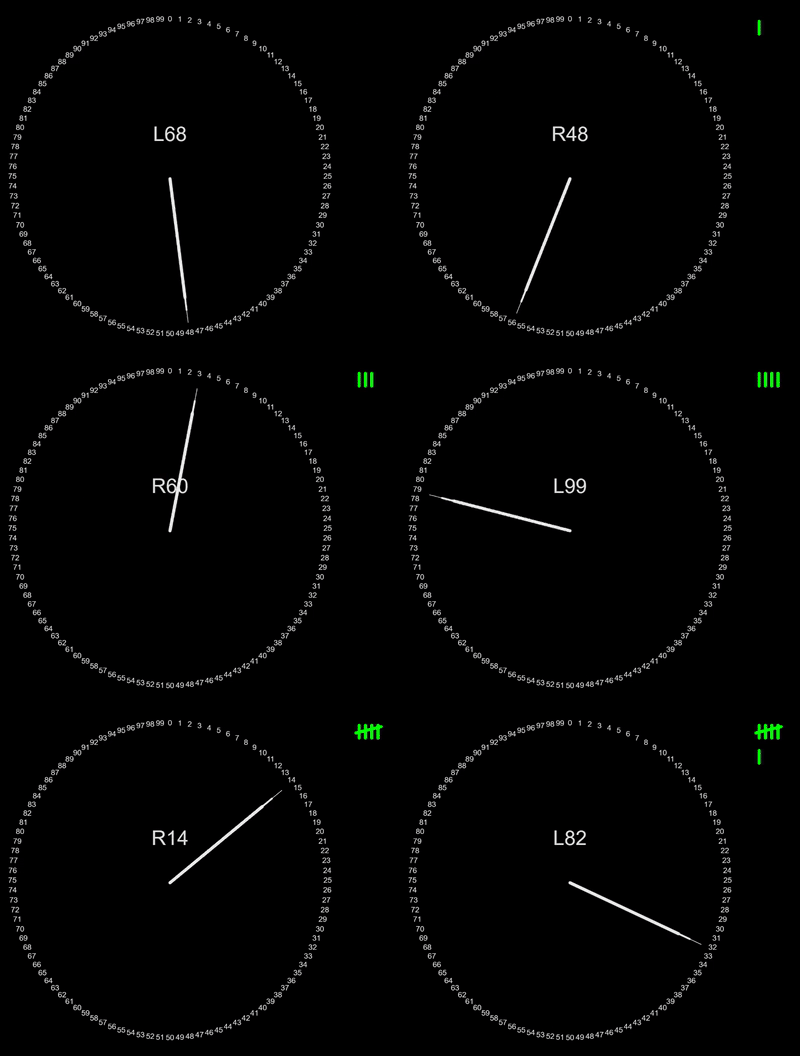 (animation courtesy of https://www.reddit.com/user/Disastrous-Funny-781/)
Here an elegant solution in AWK:
BEGIN { p = 50 }
{
    c = substr($0, 2)
    p = (p + (substr($0, 1, 1) == "R" ? c : 100 - c)) % 100
    n += !p
}
END { print n }
This takes advantage of modular arithmetic: rotating Left by N is equivalent to rotate Right by 100-N.
🎁 Day 2 : Gift Shop
Some young elves played with the gift shop computer and messed up the product ids!
You are given a list of ranges, like 11-22,95-115,998-1012,1188511880-1188511890,222220-222224, 1698522-1698528,446443-446449,38593856-38593862,565653-565659, 824824821-824824827,2121212118-2121212124 and you must find out the one that are not valid ids.
For part1 , the invalid ids are the ones that repeats exactly twice, like 11 or 123123. For part2, they can repeat twice or more, like 131313
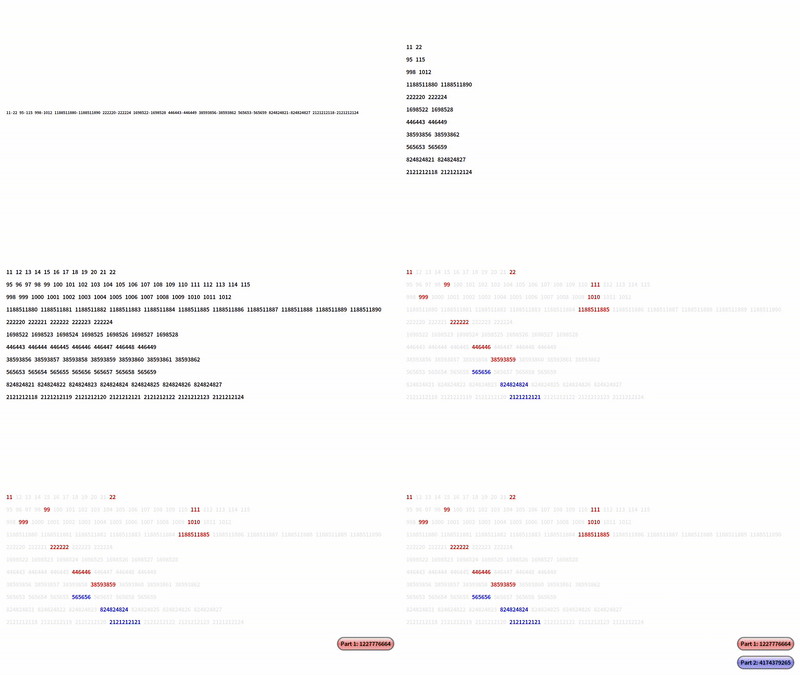 (animation courtesy of https://www.reddit.com/user/Boojum/)
Given the problem is all about filtering a list, I reached for some functional style . The D Programming Language has nice features:
bool isInvalidId1(string id) {
    auto mid = id.length / 2;
    return id.length > 0 && id.length % 2 == 0 && id[0 .. mid] == id[mid .. $];
}

bool isInvalidId2(string id) {
    auto m = id.length;
    foreach (k; 2 .. m + 1)
    {
        if (m % k == 0)
        {
            auto firstToken = id[0 .. m / k];
            if (firstToken.replicate(k).equal(id)) return true;
        }
    }
    return false;
}

void main() {
    auto ranges = stdin.readln().strip.split(',').map!(pair => pair.split('-').map!(to!long));
    auto numbers = ranges.map!(r => iota(r[0], r[1] + 1).map!(to!string)).joiner;
    writeln(numbers.filter!isInvalidId1.map!(to!long).sum);
    writeln(numbers.filter!isInvalidId2.map!(to!long).sum);
}
BTW this problem is interesting because it can be tackled in many ways: string comparison, regular expressions, and purely arithmetic. We can also notice that our input range is limited, e.g. the biggest numbers are ten digits. This means that the possible ways to “repeat” any digit pattern are limited as well.
🔋 Day 3 : Battery Joltage
You need to reach the lower floors, but unfortunately the elevators are out of power. Today’s problem is about connecting together some batteries to get the most “Joltage” out of them. So you have four battery packs, represented here by the following lines:
987654321111111
811111111111119
234234234234278
818181911112111
for each pack, you want to find the greatest number you can get by connecting two batteries, for example on the first row, the 9 and the 8 gives 98.
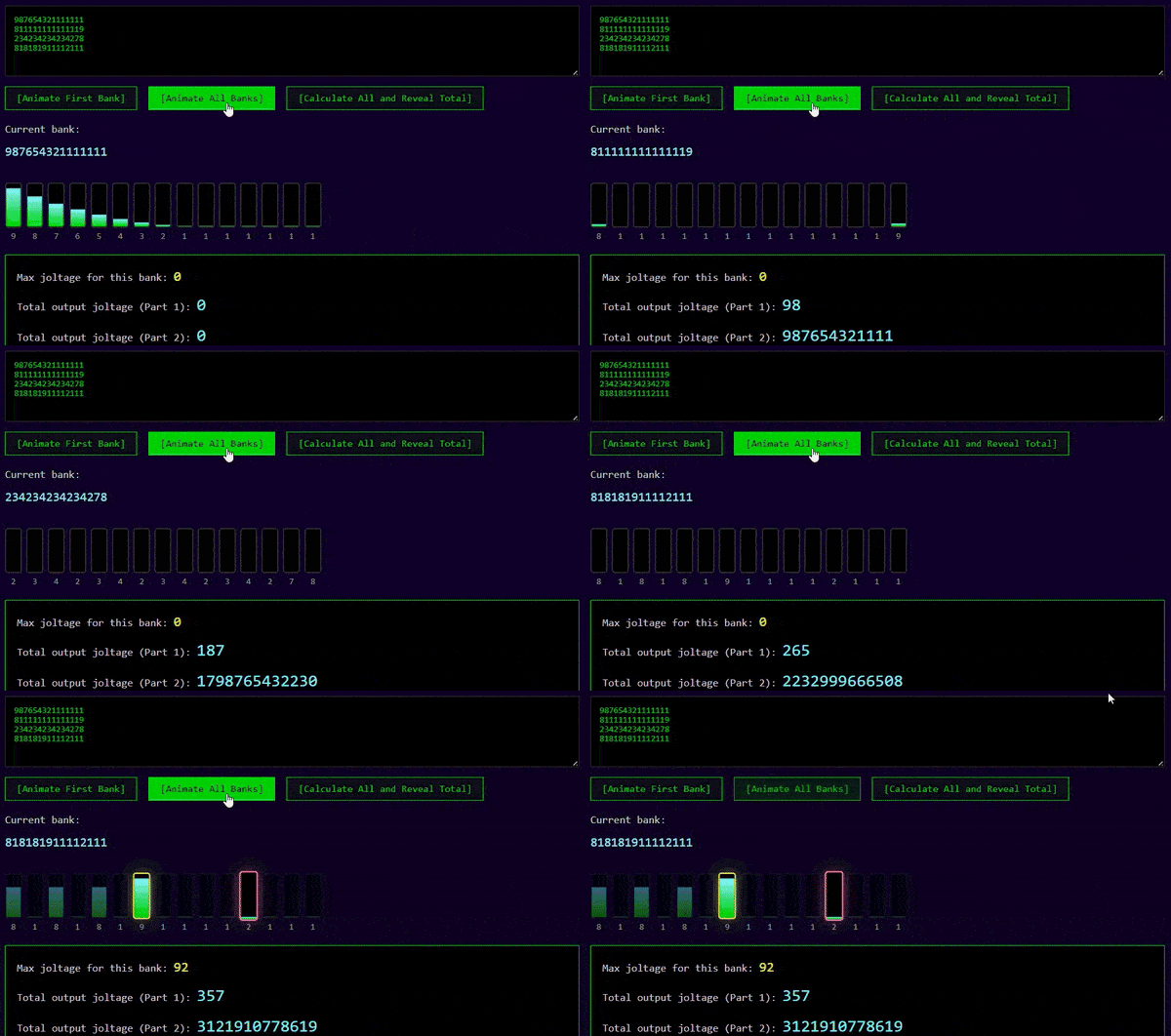 (animation courtesy of https://www.reddit.com/user/danmaps/)
On the second part you’ll need to connect 12 batteries.
Today’s solution in Nim (I’ll publish here just part1, you can find part2 on my repo)
template benchmark(code: untyped) =
  block:
    let t0 = getMonoTime()
    code
    let elapsed = getMonoTime() - t0
    echo "Time ", elapsed.inMilliseconds(), " ms"

proc part1(data: seq[int]): int =
  for i in 0 ..< data.len - 1:
    let currentVal = 10 * data[i] + data[i + 1 .. ^1].max
    result = max(result, currentVal)

var input: seq[seq[int]]
for line in stdin.lines:
  input.add line.map(proc(c: char): int = parseInt($c))

benchmark:
  echo "Part 1: ", input.map(part1).sum
The algorithm is straightforward: for each digit, pair it with the biggest subsequent one. The pair is a candidate to become the new maximum.
A couple of observations about the Nim language, which in my opinion has a lot of potential:
- I like how you can easily write templates (see the benchmark at the top) and how they seamlessly integrate with the language syntax
- the special
resultvariable is handy for any calculation and automatically returned at the end of the function - the program compile to very fast native binary: using the real 100x200 input, the program outputs the correct value in ~2 milliseconds.
🧻 Day 4 : Rolls of Paper
Proceeding towards the underground base, we find the Elves printing department, where they print the famous “good and bad” list.
The forklifts are very busy with giant rolls of paper @ so you decide to give an hand.
..@@.@@@@.
@@@.@.@.@@
@@@@@.@.@@
@.@@@@..@.
@@.@@@@.@@
.@@@@@@@.@
.@.@.@.@@@
@.@@@.@@@@
.@@@@@@@@.
@.@.@@@.@.
Turns out we can move only the rolls that have less than 4 adjacent items!
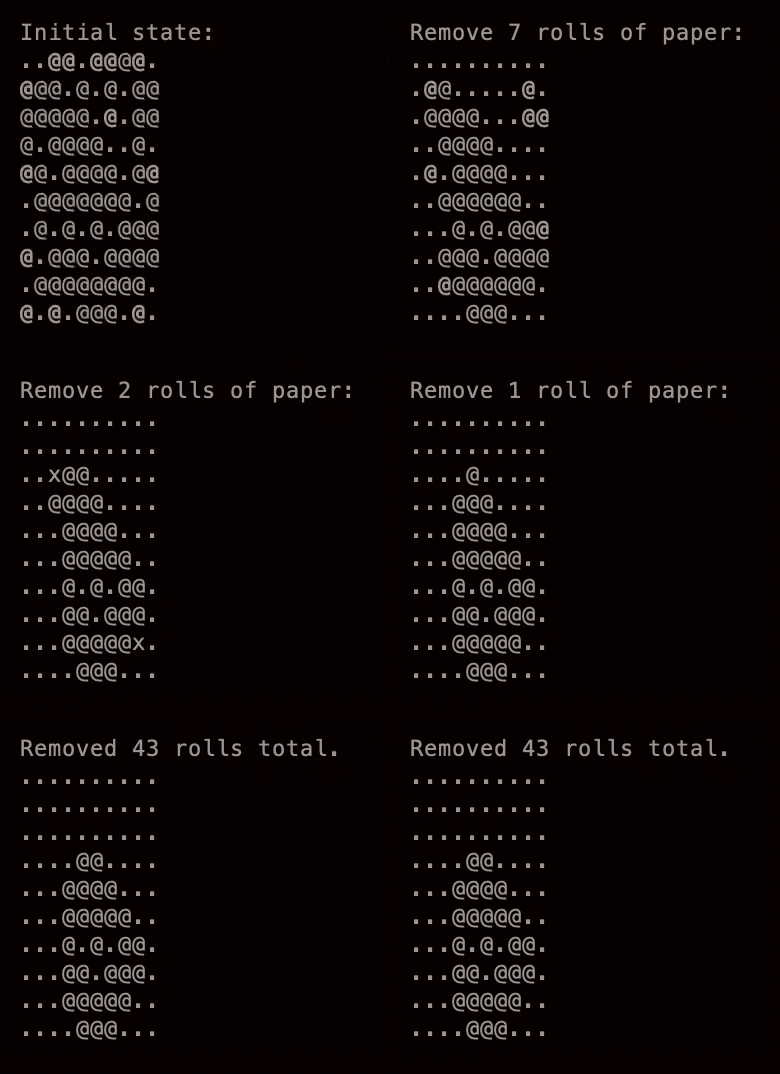 (animation courtesy of https://www.reddit.com/user/wimglenn/)
I want to try out Zig for this exercise, so I fear the code will be too long to be included here. If you’re interested, check the repository!
🥐 Day 5 : The Cafeteria
After breaking the wall (!) with a forklift, you discover there is a cafeteria behind. Today’s task is to find fresh ingredients id among the spoiled ones, given a list of ranges and the id to check:
3-5
10-14
16-20
12-18

1
5
8
11
17
32
Upper half of the input is the fresh ranges, lower one contains the ingredients. For example 1 is spoiled because is not contained in any range, while 11 belongs to 10-14 so it’s fresh.
This problem is very nice because it can be solved in many different ways, exploring efficiency concepts and set theory algorithms. I adopted a functional approach, using Elixir as a language. Complete code is on the repository
On first part, we just count how many ingredients falls into our “fresh ranges”.
def part1(fresh, ingredients) do
  Enum.count(ingredients, fn ingredient ->
    Enum.any?(fresh, &(ingredient in &1))
  end)
end
To solve second part, we basically need to “join” all the ranges and count all the IDs that falls inside the range. This is a job for the pipe operator!
def part2(fresh) do
fresh
|> Enum.sort()
|> merge_ranges()
|> Enum.map(&Range.size/1)
|> Enum.sum()
end (animation courtesy of https://www.reddit.com/user/Ok-Curve902/)
The core logic is performed by the merge_ranges() function. Let’s see it:
defp merge_ranges([]), do: []

defp merge_ranges([r1, r2 | rest]) when r2.first <= r1.last + 1 do
  merged_range = r1.first..max(r1.last, r2.last)
  merge_ranges([merged_range | rest])
end

defp merge_ranges([head | tail]) do
  [head | merge_ranges(tail)]
end
It’s a recursive function, that takes advantage of Elixir pattern matching.
- the base case, an empty list, just return the empty list
- the merge case: when the ranges overlaps, it creates a
merged_range. This new range starts at the beginning of the first range(r1.first)and ends at the greater of the two ending points(max(r1.last, r2.last)). It then callsmerge_rangesagain. Crucially, it passes a new list wherer1andr2have been replaced by the single merged_range. This allows the newly formed range to be checked for overlaps against the next range in the list(rest). - the “no merge” case: since
headdoesn’t overlap with the next range, it’s considered a final, complete range for now. We can place it at the front of our result list. The function then callsmerge_rangeson thetailof the list to continue the process for all subsequent ranges. The result of that recursive call is appended to head.
By combining these three clauses, the function elegantly walks through the sorted list, merging ranges as it goes, until the entire list has been processed.
 (animation courtesy of https://www.reddit.com/user/Just-Routine-5505/)
🎅 Notes and references
I will collect here all the links and references or related things to AoC25
(warning: there might be commercial offers)
- Advent of DevOps: https://sadservers.com/advent
- Advent of Cyber: https://tryhackme.com/adventofcyber25
- AoC in Kotlin: https://blog.jetbrains.com/kotlin/2025/11/advent-of-code-in-kotlin-2025/
- AoC Subreddit: https://www.reddit.com/r/adventofcode/
- Perl Advent Calendar: https://perladvent.org/2025/ (Day 20 is very special!)
Day 6 visualization by https://www.reddit.com/user/Ok-Curve902/
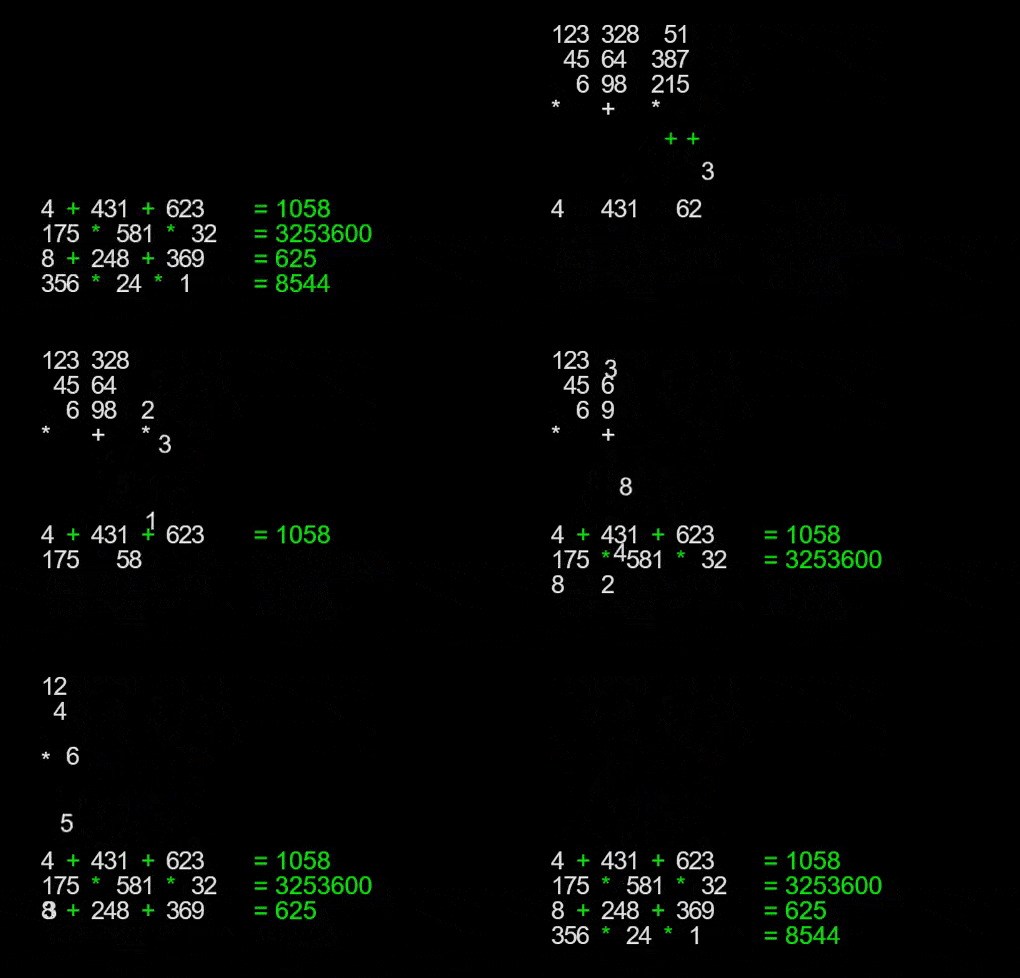
Day 7 solved on a real Christmas Tree!
 courtesy of https://www.reddit.com/user/EverybodyCodes/